
Read Watching Parthenope (2024) HD
Watch Parthenope (2024) Movie
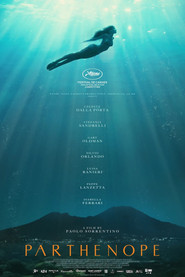
Parthenope, born in the sea near Naples in 1950, is beautiful, enigmatic, and intelligent. She is shamelessly courted by many. However, beauty comes at a cost.

Is she a siren or a myth? - siren
## The Parthenope Paradox: Decoding Sorrentino's Vile, Vulnerable Muse
Paolo Sorrentino's "Parthenope" is not a film to be devoured, but rather a cinematic painting to be meticulously studied. It's a sprawling, visually opulent tapestry woven with threads of longing, cynicism, and the undeniable magic of Naples. While the title suggests a straightforward biopic of the titular protagonist, Parthenope, played by the enigmatic Celeste Dalla Porta across most of the film, Sorrentino delivers something far more complex: a meditation on beauty, desire, and the fleeting nature of existence, all filtered through the lens of a mythical city.
Spoiling "Parthenope" in the traditional sense feels almost sacrilegious. There’s no grand plot twist to unravel, no singular event that suddenly illuminates the entire narrative. Instead, the film unfolds as a series of vignettes, connected by the ever-present Parthenope, whose life is less a narrative arc and more a series of encounters that define her evolving understanding of the world.
We see her as a child, a creature of the sea, inexplicably washed ashore, foreshadowing her lifelong connection to the siren myth. This early imagery is crucial. Parthenope isn’t simply named after the siren; she embodies her alluring, yet ultimately unattainable, essence. Men are drawn to her, captivated by her beauty, but none truly possess her. This is not a failing on their part, but rather an inherent quality of Parthenope herself.
The film then skips through decades, showcasing Parthenope's interactions with a kaleidoscope of characters: professors, poets, mafiosi, and even a grieving American writer, played by Gary Oldman in a surprisingly poignant cameo. Each encounter reveals a different facet of Naples and, by extension, a different aspect of Parthenope's character.
One crucial, and potentially polarizing, element is Sorrentino's often-cynical portrayal of intellectuals. He frequently presents them as arrogant, self-absorbed, and ultimately incapable of appreciating the raw, unadulterated beauty that surrounds them. This cynicism extends to religion as well, depicted not as a source of solace, but as a complex system of rituals and superstitions, often exploited for personal gain.
However, beneath the cynicism lies a deep affection for Naples. Sorrentino doesn't shy away from the city's flaws - the poverty, the crime, the ingrained fatalism. But he also captures its vibrant energy, its unwavering resilience, and its unparalleled beauty. Naples, in "Parthenope," is a character in itself, a constant presence that shapes and influences everyone who comes into contact with it.
Ultimately, "Parthenope" leaves the viewer with more questions than answers. What is the true meaning of beauty? Can we ever truly possess what we desire? Is happiness an illusion, or a fleeting moment of grace? These are not questions that Sorrentino attempts to answer definitively. Instead, he presents them through the prism of Parthenope's life, allowing the audience to draw their own conclusions.
The "spoiler" lies not in any single plot point, but in the realization that "Parthenope" is not about a woman named Parthenope, but about the very essence of Naples. It's a film that demands patience, contemplation, and a willingness to embrace the ambiguity and contradictions that define both the city and the human experience. It's a film that will linger in your mind long after the credits roll, forcing you to confront your own understanding of beauty, desire, and the undeniable power of a city steeped in myth and history. And that, perhaps, is the most significant revelation of all.